





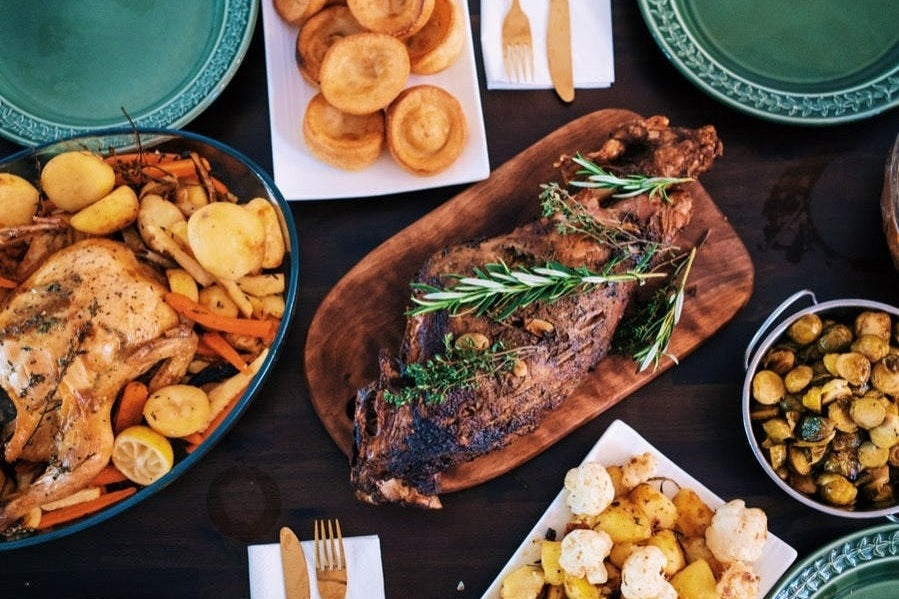

Its starting to taste a lot like Christmas, and grocery stores across Australia are heaving with crowds of shoppers piling their trollies high with festive food and drink.
But it is easy to get carried away with shopping to excess, leading to lots of food waste before December is done. To help curb your Christmas food waste mountain, plan well and prepare lists to prevent shopping on impulse.
Here are our top tips for reducing food waste at Christmas time:
1. Make Room for Christmas Food
Clean out your pantry and fridge before Christmas, using up existing ingredients to make space for Christmas cooking. Doing a little stocktake of what you already have can help you avoid buying excess.
2. Store Food Properly
Careful storage will ensure that food is kept in the best possible condition for as long as possible to minimise waste.
Here’s how to keep festive food fresh:
Ham
Wrap ham in a
clean cotton cloth or ham bag rinsed in a solution of two cups water and two tablespoons
white vinegar. Rinse out or replace the wrap every three days. Slice leftover ham off the bone, wrap it in
beeswax wraps or place in a sealed container, and store in the fridge. It will be OK for 3-5 days and can be frozen for up to 1-2 months.
Roast chook/turkey
Remove the stuffing and store it separately as it has shorter shelf life than meat because of the moisture and mixed ingredients. Cooked meat, if stored correctly, will last 3-4 days. When you heat it up, make sure it is piping hot.
Seafood
Seafood must be kept cold. When shopping for seafood use a chiller bag or esky and ask your fishmonger to pack some ice with your purchase. Refrigerate as soon as you get home, stored in a glass or ceramic sealed container. Most fresh seafood is should be consumed within 2-3 days and it can be frozen for up to 3 months. Defrost frozen seafood in the fridge, not the bench.
Salads
Serve out salad in smaller portions and top up as needed, adding the dressing only when you serve. Salads with dressing generally can't be reused and if you keep extra in the fridge until needed it will stay fresh. Store mixed leaves in an airtight container lined with a
paper towel to keep them fresher for longer.
Roast veggies (including potatoes)
Put vegetables (and all other leftovers) into the fridge within two hours after serving. Roast veggies should be ideally consumed within 3-4 days and can be stretched to 1 week if they were refrigerated promptly. You can also freeze them, including potatoes, in airtight containers. Leftover veggies and meat can be quickly whizzed up into a hearty soup if preferred.
Custard and dairy
Keep custards and dairy in the fridge until just before serving and return leftovers to the fridge immediately.
Christmas pudding
Christmas pudding can be refrigerated for up to three months or stored in the freezer for up to six months.
Cream-based desserts
Cream based dessert should be kept in the fridge until needed and returned back to it immediately afterwards. After two hours at room temperature, desserts are past their best and shouldn’t be eaten. Kept cool, they can last 3-4 days in the fridge or freezer.
Christmas biscuits
Soft cookies are at their best eaten within 2-3 days, before becoming harder. You can store hard cookies in an airtight container with a
paper towel to absorb moisture and they can last 2-3 weeks.

3. Share Your Leftovers
Got too much food? Share with your neighbours or community members in need. If you're tired of eating the same leftovers, try swapping a dish with someone down the street. Or host a leftover potluck to help eat up the last of the Christmas food.
4. Repurpose Christmas Leftovers
Tired leftovers can be given a new life with some creative recipes. Try these ideas:
- Toss veggies and meats into an egg batter to make a delicious frittata or scramble
- Turn roast veg and meat into a mouth watering chilli or stew
- Add meats and salads to sandwiches, toasties or wraps
- Chop up veg and meat and cook with leftover rice for a yummy fried rice
- Spray stale loaves of bread with water and warm up in the oven - they'll come back to life!
- Turn stale bread pieces into croutons and save for next time you have a salad or soup

5. Compost Christmas Food Waste
Some wastage is hard to avoid, but careful sorting of scraps can ensure nothing edible goes to landfill. Utilising a range of waste streams for food scraps ensures nothing ends up in your kerbside bin.
- If you have chooks, they often get the pick of the scraps and will be grateful for most things except chicken!
- Next consider which scraps can be added to your worm farm. Our wriggly friends especially enjoy soft fruits and finely chopped leftovers like salads without dressing.
- The Bokashi composting system offers a superb solution for most other types of festive food scraps including leftovers, dairy and meat.
- Vegetable scraps, along with paper and cardboard packaging can be added to hot or cold composting systems. A compost bin is also a great place for used partyware like palm leaf plates and wooden cutlery.
We'd love to know how you're having a low waste Christmas dinner this year. Tell us about it in the comments below.


Leave a comment (all fields required)